The Handmaid's Tale by Margaret Atwood is a story about a woman named Offred in a scary future where a strict religious group called Gilead rules America. Women have no freedom, and Offred is a Handmaid, forced to have babies for a powerful man, the Commander, and his wife, Serena Joy. She lives under tight control, always watched, and remembers her old life with her husband and daughter, who were taken away.
Patriarchy is a social system built upon unequal power relations that men maintain over
women.
In “The Handmaid’s Tale”, patriarchy is a theme that illustrates Gilead’s social
structure,
the
oppressive control men exert over women, and how it devalues women of their reproductive
roles,
individuality, and basic rights. Men held all political, social, and economic power,
while
women were
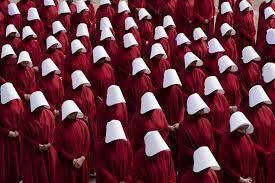
categorized by their roles, eg, wives, marthas, and handmaids, each with a specific
role.
The handmaids,
for instance, were reduced to their ability to bear children and were seen as
instruments of procreation,
while the wives were valued for their obedience to their husbands
and the ability to run their households.
The novel also highlights religious patriarchy in the
sense that roles for men and women were shaped
around biblical ideas of gender. For instance, in
the bible where a slave or servant would perform the role
of a concubine, with the resulting
children being considered as part of another woman. In Gilead, women
are stripped of their
economic, political, and reproductive rights which aligns to the situations in our society
where women face discrimination in employment, limited access to education and restrictions in
their bodily
rights for example, child marriages, forced marriages and lack of access to
abortion
services are real life
manifestations of control over women’s lives.
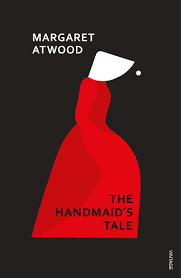
In the Handmaid's Tale, power is the main issue. Gilead’s leaders control everyone,
especially women. The government, run mostly by men, takes away people's freedom
to keep
itself in charge. Women like Offred, a Handmaid, are treated like objects, given
names like
“Of Fred” to show they belong to their commanders. They can’t make their
own choices, and
harsh punishments, like public hangings, scare them into obeying.
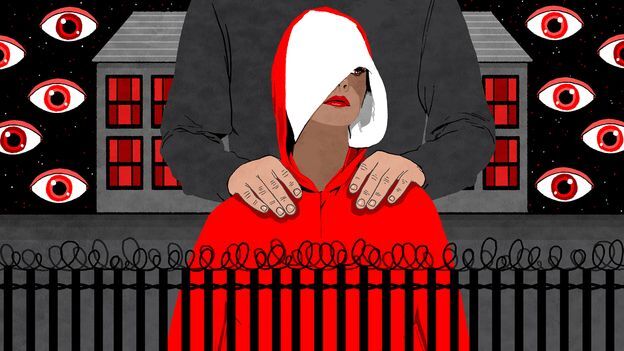
Gilead also uses spies,
called the Eyes, who watch everyone’s every move, making
people afraid to speak out or act
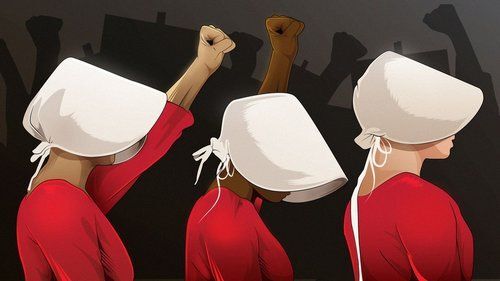
against the rules. But not everyone gives in. Off
In the book ‘The Handmaid’s Tale’, the concept of fear is exposed in many occasions amongst
the young
women, who were only for the role of surrogacy, within the oppressive society of
Gilead. Today, even in the
contrast of societal settings between Gilead and current society, the
concept of fear is still portrayed in many
aspects. The Gilead setting was that, in any case of
deviation from expected moral conduct, such as trying to
escape from designated bounds and
committing adultery, heavy punishments, which are: breaking of legs and
being hung publicly
respectively for the above cases, were executed on the victims, not only to stop them from
messing up again but also to send out a warning to the rest, who seemed to be lucky not to be
in that situation
for the moment. Current society reveals fear in almost similar circumstances
of unfair treatment yet choosing
to move on in silence. For example the fear to lose one’s job
because of complaints to unfair work conditions,
the fear of imprisonment because of criticism
to prevailing authorities and this can even include death cases
and cases of abduction, fear of
religious leaders who tend to threaten their audiences with disastrous
experiences for violation
of any instructions, among other fears.
In “The Handmaid's Tale”, religion is one
of the main means of control used by
Gilead. Where the society was heavily
influenced by interpretation of the bible.
Gilead claims to promote christianity
values such as charity and forgiveness,
while in reality these values are
distorted and used as a way to
promote the oppression of women. In
the book, people in power use certain
passages from the bible like the phrase
“Blessed be the fruit” which is used as a
greeting among handmaids,
underscores their sole purpose of
reproduction, reducing their identity to
their biological function. This is also still
a big issue in today’s society, where
because of religion women are
manipulated to believe they are only
meant for some things not the other,
mainly in African societies like Rwanda
specifically where some churches
prohibit women from doing certain
roles, or having certain rights like how
the bible says women should be
submissive. This is used in today’s world
to manipulate women into believing
they are meant to be just house wives
who respect and do whatever men say
in the form of being respectful to men
no matter how badly they are treated.
In The Handmaid’s Tale the concept of loss of agency refers to
the systematic stripping away of individual autonomy and
freedom, particularly women within the oppressive society of
Gilead. Gilead’s regime controls women’s bodies, identities,
and decision-making ability by reducing them to vessels for
procreation and instruments of state control. Women are
categorized as the handmaids (Tasked with reproduction
only), the Marthas (tasked with doing the house chores), and
the Elites (wives to the commanders). The handmaids are
assigned to reproduce for the Elites, stripped of their personal
freedom and forced to engage in sexual acts for procreation.
The Marthas, Aunts, and Wives are subjected to varying
degrees of control and restriction, lacking autonomy in their
lives. This shows the complete absence of reproductive rights
for women in Gilead, who are not allowed to make decisions
about their own bodies or future pregnancies. Gilead
systematically eliminates individual names and identities,
replacing them with assigned roles that reinforce the societal
hierarchy. Women are denied access to education,
employment, and personal property, further limiting their
capacity for independent thought and action. Gilead’s color-
coded attire and strict rules regarding appearance furthercoded attire and strict rules regarding
appearance
further
emphasize the suppression of individual expression and
identity. The women are novice in political decisions or the
legal system. Even seemingly mundane aspects of daily life,
like shopping or travel, are controlled by others. The threat of
severe punishment for any deviation from the prescribed rules
reinforces the lack of agency and fosters a climate of fear and
compliance. While women in Gilead are largely powerless, the
novel also explores subtle forms of resistance such as
maintaining personal memories, relationships, or acts of
defiance. The novel’s narration by Offred highlights the
importance of language as a means of resistance and
maintaining a sense of self. Even in the face of immense
oppression, the characters hold on to a glimmer of hope for
escape and a future where they can exercise their agency.