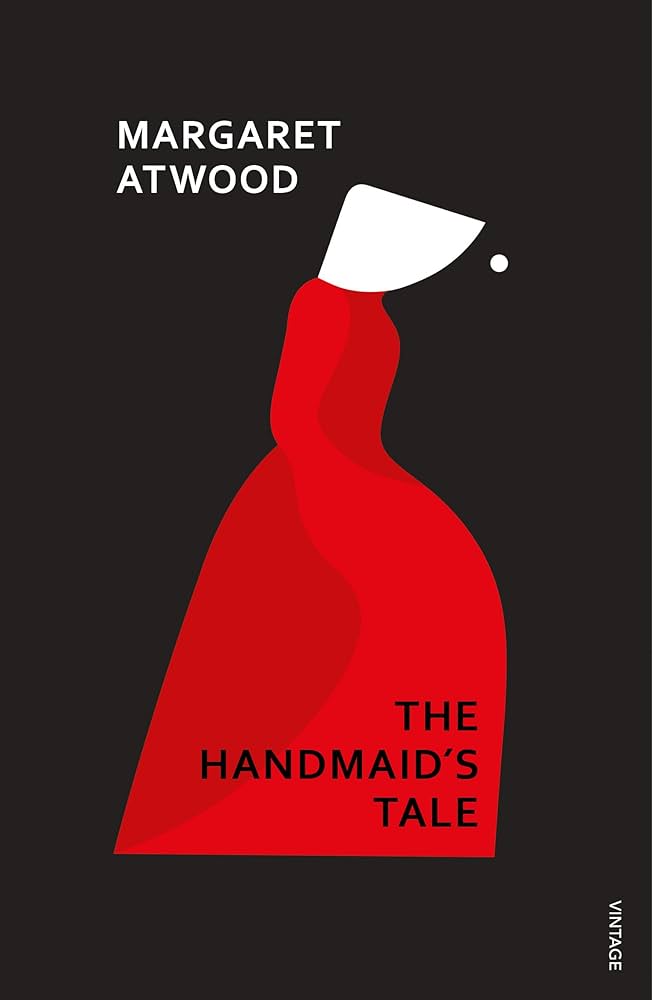
The Handmaid's Tale is one of Margaret Atwood’s most famous works. (Largely due to the TV series that gained so many audiences). The book is a seminal work of dystopian fiction that explores different themes of gender oppression (particularly female), power, control, and the resilience of the human spirit. The book is set in a plausible future, and it remains interestingly relevant . The author has presented the book as a forecast of what may happen shortly, where governments will have been taken over and ruled by right-wingers and religious fundamentalists. Males will be restored to their traditional role of warrior, and the women to “their roles”.The women will have been divided into wives, breeders, servants, and many more. I believe the book is aimed at readers of all audiences as it sets a pace for patriarchal criticisms and theoretical rules which is happening even in the world today. Atwood's art of bringing out the best narrative by the persona has made the book set cement in as one of the good feminist literature.
In the book, much of America is overthrown, and it is set in the Republic of Gilead, a theocratic society. Due to widespread infertility caused by environmental degradation and sexually transmitted diseases, fertile women referred to as Handmaids are forced into reproductive schemes. The story is narrated by the character Offred, and the readers depict the story from the persona’s point of view . She explains how her life and other handmaids are under surveillance and control, and her identity and name are now unrecognizable and reduced to her biological function. In the house, there are different roles, each with a hierarchy of its own. The narrator, OffRed, lives in the Commander’s house, where her main role is to breed, and the children she bears will automatically belong to the wife (Serena Joy) and the Commander. She goes on and states that after a successful breeding, the handmaids are then transferred to the next commander to perform the same duties.
The story follows Offred’s journey from the years before the rise of Gilead to how she was forced to train under very cruel aunts, such as Aunt Lydia, who believed in this way of life and used religion to justify the oppression. They would quote bible verses such as “blessed be the fruit of your womb” to implant in the handmaid’s mind that their main role on earth is to sire children. Instead of focusing on specific events, the novel would switch from flashbacks and present scenes, just like the human mind which gets distracted from thought to thought. I feel the author allowed the users to experience the real human emotions and thoughts together with the persona as they read through the book. However, this would sometimes cause me confusion as unexpected time shifts would happen, and it was hard to comprehend where the scene was set. Artwood presents a stark vision of a society where women are stratified and controlled based on their fertility and their roles as Wives, Marthas, and handmaids, showing how Gilead institutionalizes sexism and uses religious doctrines to justify oppression. In the story, Ofred remembers her previous life with Luke and her daughter, and how she used to have a job, but it was all stripped off. She yearns for the freedom she had before over her own body and her environment.
Despite all these oppressive actions, the human spirit persists, and it is seen by how Offred had quiet acts of rebellion through her affair with Nick and the Commander. She also narrates how her friend Moira was resistant and her endless attempts at escape. Moira’s first escape attempt was met by a cruel punishment of breaking her legs, but she later succeeded, and I feel this was an encouragement to Offred to explore the possibility of freedom in her own mind. The commander, too, had all the power and status in Gilead state, yet he still felt compelled to break the rules by having unauthorized interaction with Fred. I also note that despite the rules, Serena Joy was helping institute, she helped Ofred have an affair with Nick to sire a child for the commander. Serena Joy is also trapped in the same rules, where she's not allowed to read and write. This depicts how, even in today’s society, the creators of the rules are usually among the breakers of the rules.
The aunts, on the other hand, are depicted as the true believers of the Gilead philosophy, and I feel this is due to the position of power that they hold in the society. On the other hand, Ofred’s shopping power is depicted as more proactive and rebellious, while Ofwarren is seen as someone who has already found joy in her reality, and this makes her unpopular among the handmaids. This depiction of characters made it more believable and relatable.
I particularly loved Atwood’s writing style, given that it is the first book of hers that I have read. She was lyrical and restrained, often infused with poetic introspection. I loved how the narrative alternates from present-day Gilead and Offred’s memories, creating an emotional resonance of loss and endurance. Her use of internal monologue of Offred allowed me to relate and feel her psyche, fear, hope, and occasional dark humor. I also love how the book has raised debates on women’s rights and reproductive rights in society. I believe the book will be timeless and will be relatable across every time frame. I believe the novel opens every reader's eyes to discussions on bodily autonomy, religious fundamentalism, and authoritarianism. The complete reimagining of society as shown in the novel allows us as readers to ask ourselves: What if? If the deliberately extreme society of Gilead existed, what would it look like, and how would people react within it?
As much as I enjoyed the book, I feel that the constant shift in scenes from backflash to present scenes was a bit more confusing to me . The extreme description of the setting also created a sense of agency to get to the end of the scene.Overall, the book is a cautionary tale, and I did enjoy reading it. It is a must-read for anyone who loves thought-provoking literature. I’d recommend the book, and I look forward to reading more of Artwood's Literature works.



.jpeg)
.jpeg)