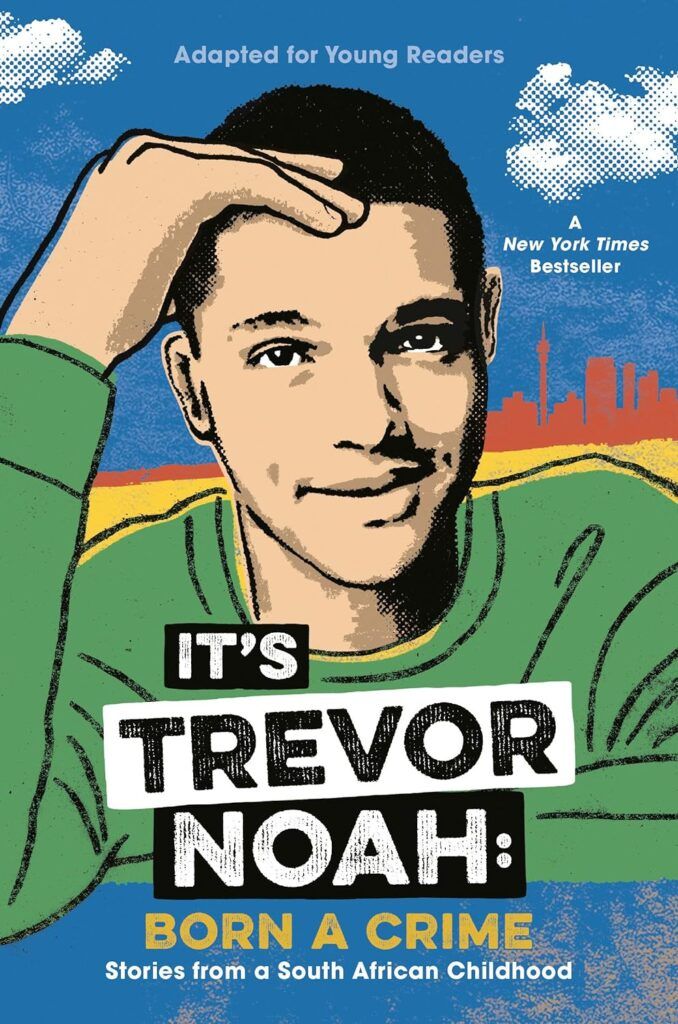
Author of Born a crime
In Born a Crime: Stories from a South African Childhood, comedian and television personality Trevor
Noah
gives a heartfelt and funny recounting of his experiences growing up in South Africa as an oppressed
person.
Stories of Noah’s life are interspersed with insights into South Africa’s culture, systems, and
history.
Noah was born in 1984 to a single mother, Patricia, during the time of racial segregation known as
apartheid.
Patricia was a strong, driven woman who paid little heed to the racist laws that oppressed her. Noah’s
father, Robert,
agreed to give Patricia a child during a time when sexual relationships between black and white South
Africans were illegal.
Robert, a Swiss immigrant, never supported segregation and did what he could to undermine apartheid.
Because it was dangerous for Patricia and Robert to be seen with their mixed-race child,
Noah recalls sometimes being momentarily abandoned by his parents in public settings.

If I were to rename Born a Crime, I would call it A Life in Color.
I picked this title to represent Trevor's mixed heritage and social labels
that described life as a South African.The word color aslso represents a life colored
in bold refusing to be dulled by oppression. Color also represents the vibrancy in him
Trevor Noah is a humorous person and resourceful as well
The quote that states, “Abel wanted a traditional marriage with a traditional wife,
but he never fell
in
love
with subservient women. He only wants a free woman because his dream is to put her in a cage.
Abel’s longing for a traditional wife deeply highlights a desire for traditional gender norms by wanting
a woman who prioritizes
housewifery,yet his admiration for free women, I suppose, aligns with my view of
hypocrisy in most relationships where partners
claim to value independence but then limit it. For
instance,
a
man
might
support a woman’s career path but then expect her to
prioritize family over work, which relates well
with
Abel’s
cage.
This quote talks about traditional gender roles and explores how complex marriage and relationships are.
Abel’s need for a traditional
wife might be a way of controlling his environment,
which can lead to
violence
and
abuse, while Patricia’s character challenges these traditional ways with modern ways of thinking.
However, this quote also illustrates the ongoing struggle in our societies to reconcile traditional
values
with
modern social changes
because true equality in relationships involves dismantling these cages and
celebrating
freedom, not control, true love, not hate, and mutual respect from both sides.